
Picture this: you're cruising behind one of our Axis boats, carving up a perfect wave that never ends, and with no rope in sight. It's just you, your board, and that sweet, sweet push from the boat's wake.
Welcome to wake surfing, the sport that's basically like having your own personal wave machine wherever there's enough water. Unlike traditional surfing where you're at the mercy of mother nature's moods, wake surfing behind an Axis boat gives you that perfect endless ride every single time. No waiting for sets, no paddling until your arms feel like jelly, and no sitting around wondering if the waves are even going to show up today.
Wake surfing is also very approachable - despite how impressive it looks. Sure, watching someone effortlessly glide along on a wave while chatting with their friends on the boat, can make it seem like some kind of magic. But the reality is that most people can get up and riding within their first few attempts.
GET YOUR BOAT DIALED IN
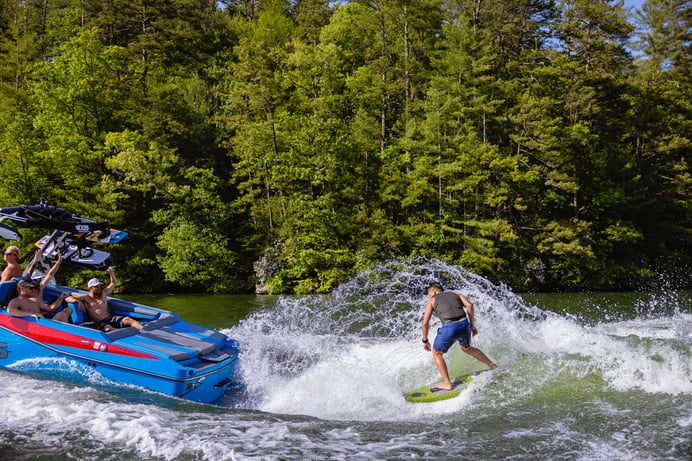
Not all wake surfing boats are created equal. You need a boat that is specifically designed to create that perfect surfable wave. The most important factor? A clean, well-shaped wave. Everything else builds from there.
This is where Axis boats shine. We're built from the ground up with wake surfing in mind, featuring the Wake Plus hull that delivers clean, ocean-like waves right from the factory. With Axis' industry-leading, one-of-a-kind Surf Gate and Power Wedge technology, it's easy to create waves that are easily adjustable for beginners and pros alike.
Starting with Factory Presets
Here's the good news for beginners: you don't need to overthink this. Axis boats come with factory presets that give you proven configurations right out of the gate. Simply select your surf side on the touchscreen, and the system strategically distributes ballast across multiple tanks to create a clean, surfable wave.
A common misconception is that beginners need massive amounts of ballast to create a rideable wave. Actually, you need just enough to generate a clean wave—not necessarily a fully loaded boat. The factory presets are designed with this in mind, giving you a great starting point that you can adjust as you gain experience and figure out what works best for your crew.
Setting Up for Your Session
Before you hit the water, figure out which foot you want forward. If you're not sure, think about which foot you'd naturally put forward when skateboarding or riding a scooter. Regular footers ride with their left foot forward, while goofy footers lead with their right. This determines which side of the boat you'll surf (regular on the left/port side, goofy on the right/starboard side).
Once you know your stance, select that surf side on the Axis touchscreen and let the integrated ballast system do its thing. The beauty of having a boat designed specifically for wake surfing is that the technology handles the complexity for you, so you can focus on having fun.
Speed matters too, but again, keep it simple. For beginners, you'll want to start around 10-11 mph. This creates a mellower, more forgiving wave that's easier to catch and ride. As you get more comfortable, you can experiment with different speeds to find what works best for your style.
CHOOSING YOUR GEAR
BOARD
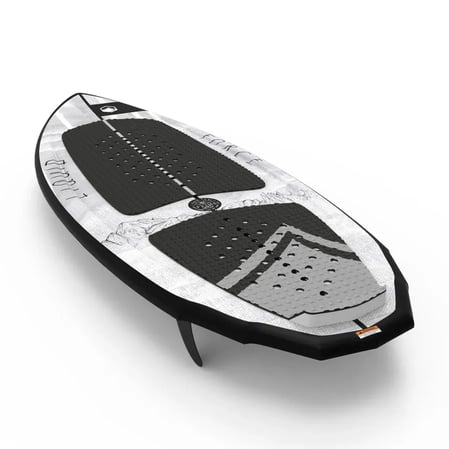
As a beginner, having the right gear can make all the difference, so you'll want to start with a larger, more stable wake surf board. Think of it like learning to snowboard – you wouldn't start on a tiny freestyle board, right? Look for something in the 5'2" to 5'6" range with plenty of width and volume. These boards are way more forgiving and will help you find your balance much quicker.
The surf style boards (also called skim style) are super popular, but they can be trickier for beginners. Start with a surf-style board that has a bit more foam and stability, then work your way down to smaller, more aggressive boards as your skills improve.
JACKET
Safety first: you need to wear a USCG-approved life vest any time you're wake surfing. This isn't optional - it's required by law. But more importantly, it's the smart thing to do. Look for a life jacket/life vest that's designed for water sports, offering a snug fit that won't ride up when you're in the water. Many wake surfers prefer low-profile impact vests that allow for a better range of motion while still providing the flotation and protection you need.
Also, make sure that your vest fits properly. Too loose and it'll shift around or ride up; too tight and it'll restrict your movement. A good life vest should feel secure but comfortable, allowing you to move freely while you're riding.
ROPE
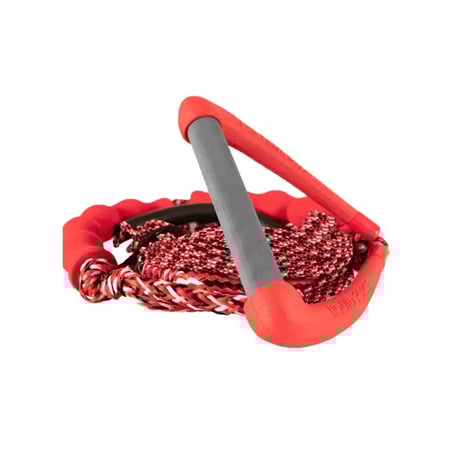
Wake surf ropes are typically shorter and have no stretch – usually around 20-25 feet. The handle should be comfortable with a good grip. Many wake surf ropes come with sections you can remove to adjust the length as you get better, placing you directly in the wave once you're up.
GETTING UP AND FINDING YOUR BALANCE
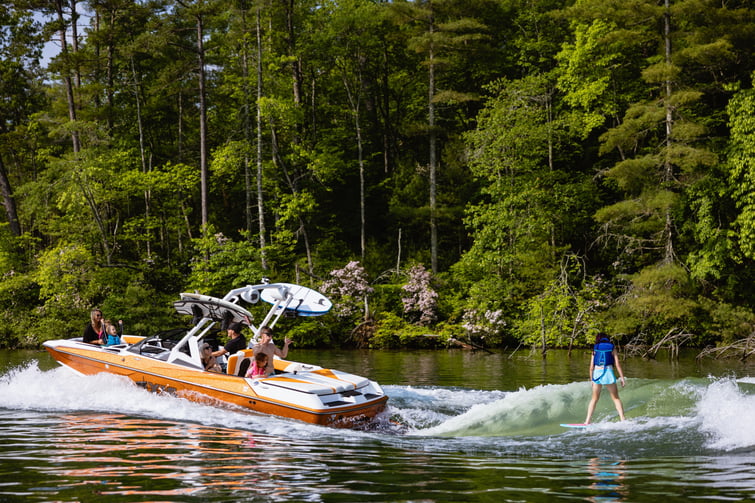
Alright, here's where the fun starts. Getting up on a wake surf board is actually pretty similar to wakeboarding, but with a few key differences—and there are some things you should focus on before you even think about dropping that rope.
The Setup
Start in the water behind the boat with your knees pulled up to your chest and the board perpendicular to the boat. Keep your arms straight and let the boat do the work. As the boat starts to pull, resist the urge to pull yourself up with your arms. Instead, let the boat pull you up gradually while you focus on keeping your weight centered over the board.
BEFORE YOU DROp THE ROPE
Once you're up and riding, don't rush to let go of the rope. This is your opportunity to get comfortable with the board and dial in your balance. Spend some time just holding on and getting a feel for how the board responds. Practice shifting your weight slightly from heel to toe. Get comfortable with your stance. Feel where that "pocket" is - that sweet spot where you can feel the boat's wake pushing you forward.
The more time you spend with the rope in hand, learning to control the board and finding your balance, the easier it'll be when you finally let go. There's no prize for dropping the rope on your first run. Take your time here.
THE magic moment
Once you're comfortable in the pocket of the wave and you've got your balance dialed in, that's when you can let go of the rope. This is what separates wake surfing from wakeboarding or water skiing—you're literally surfing the wave created by the boat, with nothing tethering you to it. And trust us, that feeling is absolutely addictive.
BALANCE & CONFIDENCE
Those first few attempts are going to be wobbly, and that's totally normal. The key is to keep your knees slightly bent, your weight centered, and your eyes looking ahead rather than down at the board. Think of it like riding a bike. As soon as you stop overthinking it and let your body find its natural balance, things start clicking.
Start by just focusing on staying upright and riding the wave. Don't worry about carving or doing tricks right now – just get comfortable with the feeling of surfing that endless wave. Practice shifting your weight slightly from heel to toe to feel how the board responds.
One thing that trips up a lot of beginners is trying to surf too far back on the wave. You want to stay in that pocket where you can feel the push of the water. If you drift too far back, you'll lose power and end up having to grab the rope again.
DEVELOPING YOUR SKILLS
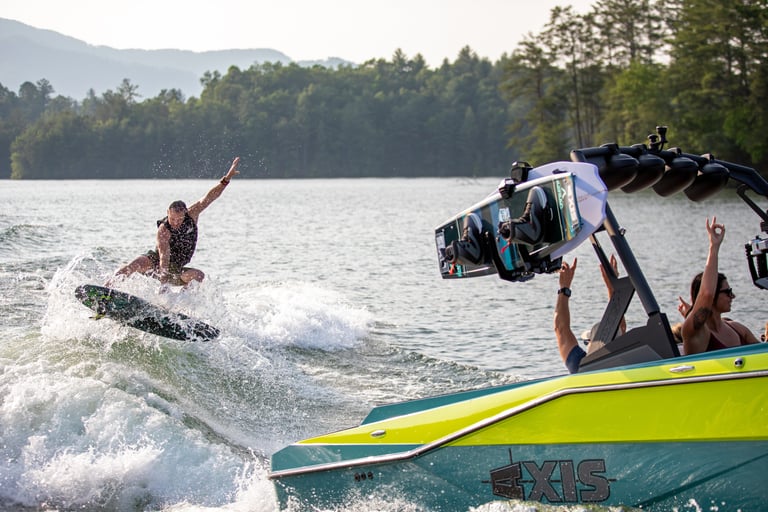
Once you're comfortable riding the wave, you can start playing around with some basic moves. Try shifting your weight from rail to rail to carve back and forth across the wave. This not only looks cool but also helps you understand how the board responds to your movements.
Work on riding different parts of the wave too. You can surf closer to the boat for more power, or drift back a bit for a mellower ride. Learning to read the wave and position yourself where you want to be is a key skill that'll serve you well as you progress.
COMMON MISTAKES AND HOW TO AVOID THEM
Mistake: Trying to muscle your way up instead of letting the boat and physics do the work.
Solution: Stay relaxed, keep your arms straight, and trust the process. The boat will bring you up—you don't need to help it.
Mistake: Looking down at the board instead of ahead.
Solution: Keep your head up and look where you want to go, not where you are. Looking down messes with your balance and makes everything harder. Think of it like riding a bike—you look ahead, not at your feet.
Mistake: Leaning too far back.
Solution: A lot of beginners do this, thinking they need to "fight" the pull of the boat. Actually, you want to stay relatively centered with just a slight lean forward. The wave will support you—you don't need to fight it.
Mistake: Trying to surf too far back on the wave.
Solution: Stay in that pocket where you can feel the push of the water. If you drift too far back, you'll lose power and end up having to grab the rope again.
Mistake: Dropping the rope too early.
Solution: Don't rush it. Spend time with the rope learning how to control the board. Get comfortable with your balance and board control first. The rope-free surfing will come naturally once you've built that foundation.
Mistake: Giving up too quickly!
Solution: Wake surfing has a bit of a learning curve, and even people who are great at other water sports sometimes struggle at first. It's a different feeling than wakeboarding or skiing. Give yourself time to adapt. You will get there, we promise.
THE BOTTOM LINE
Wakesurfing often looks way harder than it actually is. Sure, the pros make it look effortless, but with the right boat setup (seriously, invest in a proper wake boat like an Axis), good instruction, and some patience with yourself, you'll be riding that endless wave in no time.
And the best part is that, as we have shown today, once you get it, you get it. That feeling of dropping the rope and surfing behind the boat is absolutely addictive. Pretty soon you'll be the one posting those epic surf videos and getting your friends hooked on this incredible sport.
So grab some friends, fire up your Axis boat, and we'll see you out on the water!