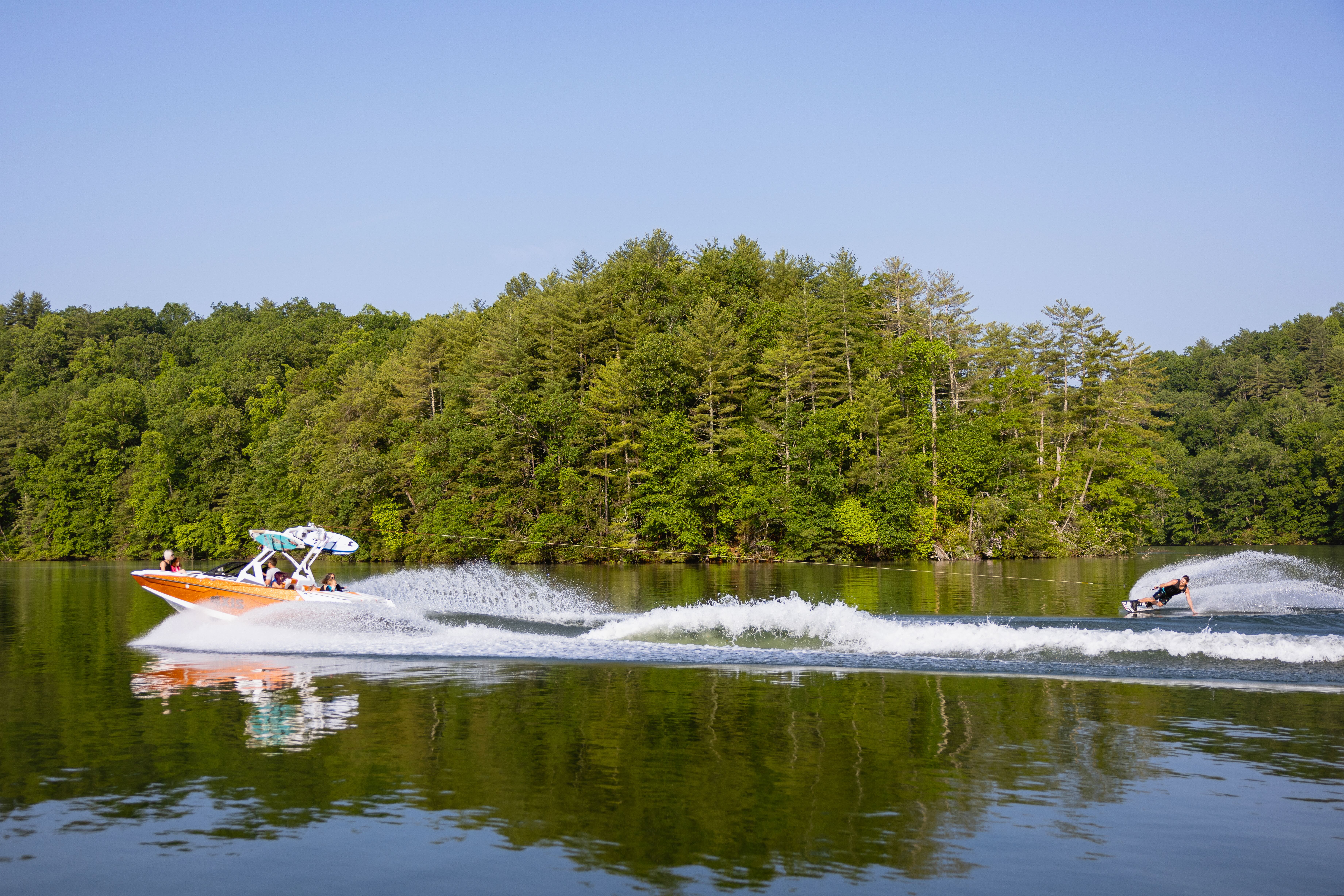
So you've been watching those smooth wakeboarding videos on social media and thinking, "I want to try that!" Well, you're in for a treat. Wakeboarding is one of the most exhilarating watersports out there, and once you get the hang of it, you'll be hooked for life. Let’s be honest—your first time behind the boat might feel a little more like finding your balance than the effortless rides you’ve seen online, and that’s totally okay.
Don't worry, though. Every pro wakeboarder started exactly where you are now. With the right tips, proper equipment, and a little patience, you'll be carving wakes and maybe even attempting your first wake-to-wake jump sooner than you think. Let's dive into everything you need to know to get started wakeboarding behind the boat.
GETTING THE RIGHT GEAR
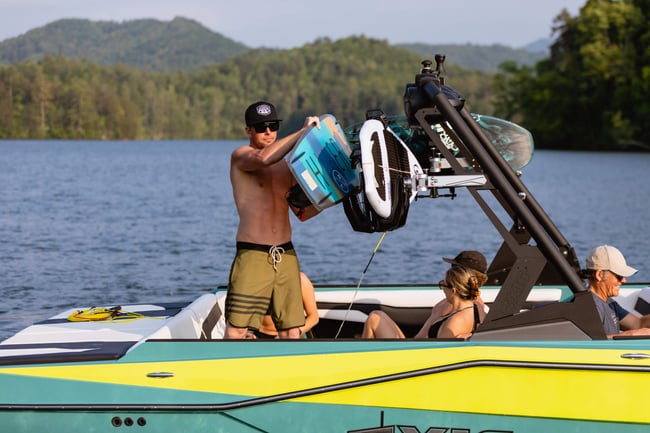
Before you even think about hitting the water for the first time, you need the proper equipment. Your wakeboard is obviously the star of the show, but choosing the right one makes all the difference for beginners.
For your first board, go with something in the 130-145cm range, depending on your weight and height. Beginners should look for boards with a continuous rocker (a smooth, consistent curve from tip to tail) rather than a three-stage rocker. The continuous rocker provides a smoother, more forgiving ride that's perfect while you're learning the basics.
The bindings are just as important as the board itself. Make sure they fit snugly but aren't so tight that they cut off circulation. You want to feel secure in them, but you also need to be able to get out quickly if you take a spill.
Don't forget about your life jacket. It's not just a safety requirement, it's your best friend out there. A properly fitted Coast Guard-approved life vest will keep you afloat during those inevitable wipeouts and give you confidence to push your limits safely.
UNDERSTANDING BOAT SETUP AND SPEED

The boat setup can make or break your wakeboarding experience. For beginners, you want to start slow – and we mean really slow. Most newbies think they need to go fast to get up on the board, but that's actually counterproductive.
Start with a speed between 15-18 mph. This gives you enough pull to get up without being so fast that you lose control immediately. As you get more comfortable, you can gradually increase speed, but many recreational wakeboarders never go much faster than 22-24 mph.
The rope length matters too. Begin with a shorter rope – around 55-65 feet. This keeps you closer to the boat where the wake is smaller and less intimidating. As your skills improve, you can lengthen the rope to get into the sweet spot of the wake for bigger jumps.
Make sure your boat driver knows what they're doing. A good driver will keep the speed consistent, make gradual turns, and communicate with you about what's coming next. If possible, have an experienced wakeboarder in the boat who can give you real-time feedback and encouragement.
MASTERING THE DEEP WATER START
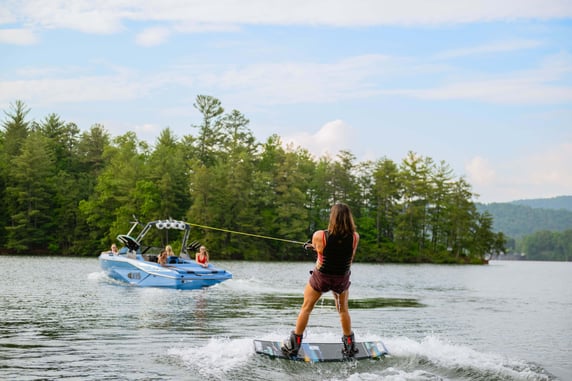
The deep water start is your gateway to wakeboarding, and getting it right will save you from a lot of frustration. Start by floating on your back with the wakeboard on your feet and your knees pulled up toward your chest. The board should be perpendicular to the boat, with the tip slightly above the water surface. Hold the rope handle with both hands, arms straight, and let the rope run between your feet or to one side of the board.
When you're ready, signal the driver to start pulling. Here's the key: let the boat do the work. Don't try to stand up immediately. Instead, keep your knees bent and let the boat pull you into a squatting position. The board will naturally start to plane on the water surface.
Once you feel stable, gradually extend your legs to stand up. Keep your weight centered over the board and your knees slightly bent. Look ahead toward the boat, not down at the water or your feet.
BODY POSITION AND BALANCE
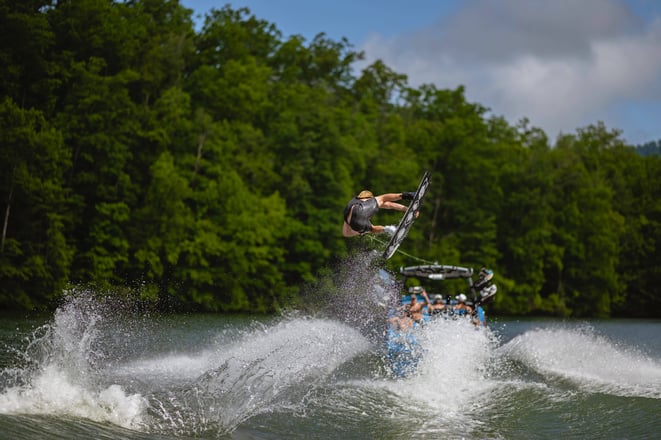
Good body positioning is everything in wakeboarding. Your stance should be comfortable and athletic; think about how you'd stand if someone were about to throw you a basketball. Knees slightly bent, weight centered, and ready to react.
Keep your weight on your back foot (the foot closer to the tail of the board) about 60-70% of the time. This helps the board track straight and prevents the nose from diving underwater. Your front foot provides steering and control.
Your upper body should be upright but relaxed. Don't lean back against the rope though. This is a common mistake that leads to face-plants when you hit the wake. Instead, think of the rope as a connection to the boat, not something to hang onto for dear life.
Arms should be straight but not locked, and keep the handle close to your body at hip level. If you find yourself getting pulled over the front of the board, you're probably leaning too far forward or holding the handle too high.
NAVIGATING THE WAKE
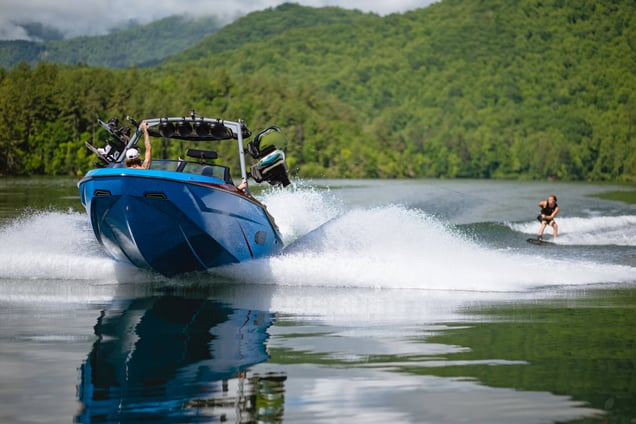
Once you're comfortable riding behind the boat, it's time to tackle the wake. The wake might look intimidating at first, but it's actually your friend and it's what makes wakeboarding so much fun.
Start by riding in the smooth water to one side of the wake. Practice shifting your weight from edge to edge to turn the board. To turn toward the boat (cutting in), put pressure on your toes. To turn away from the boat (cutting out), put pressure on your heels.
When you're ready to cross the wake, start from the smooth water and gradually build up speed as you approach. Keep your knees bent and your weight slightly back. Don't try to jump the wake at first – just ride over it smoothly. The wake will give you a little boost, but don't panic. Keep your body position consistent and ride it out.
COMMON BEGINNER MISTAKES TO AVOID
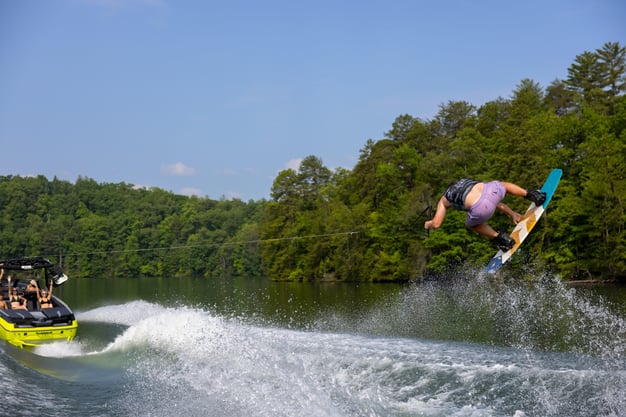
Every beginner makes mistakes – it's part of the learning process. But knowing what to watch out for can help you progress faster and avoid some painful wipeouts.
-
Don't try to muscle your way up out of the water. Let the boat's power do the work. Fighting against it will only tire you out and make it harder to get up.
-
Avoid looking down at your feet or the water. Keep your eyes up and focused on where you want to go. Your body will naturally follow your gaze.
-
Don't death-grip the handle. A relaxed grip gives you better control and won't tire out your forearms as quickly. If you feel like you're losing control, resist the urge to pull harder on the rope.
BUILDING CONFIDENCE AND PROGRESSING
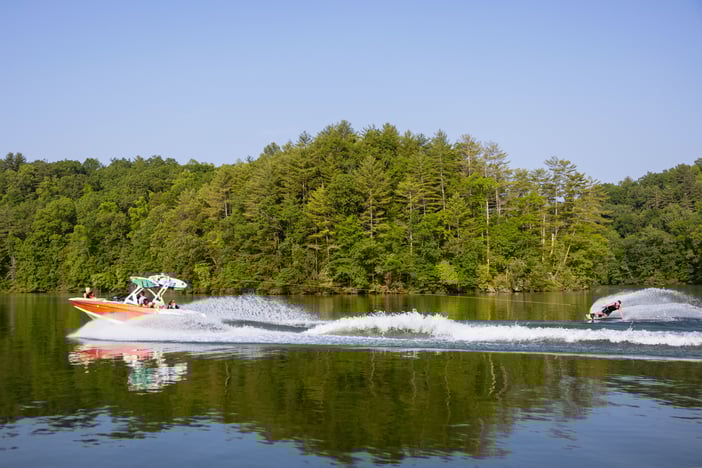
Wakeboarding is as much mental as it is physical. Start with realistic goals. For example, maybe it's just getting up on your first try, or successfully crossing the wake without falling. Celebrate the small victories, because they add up to big progress.
Practice in calm water conditions when you're starting out. Choppy water and boat traffic make everything harder, so give yourself the best chance for success with good conditions.
Don't be afraid to fall; it's going to happen, and it's not as bad as you think. The key is learning how to fall safely. When you feel yourself going down, try to fall backward away from the board rather than forward over it.
SAFETY FIRST, FUN ALWAYS
Wakeboarding is incredibly fun, but it's super important to prioritize safety at all times. When riding, always wear your life jacket, even if you're a strong swimmer. Make sure there's a spotter in the boat watching you at all times, and establish clear hand signals with the boat, for communication.
Know your limits. And don't push too hard too fast. It's better to have twenty great runs at a comfortable level, than to get hurt trying something beyond your current skill level.
With these tips in your back pocket, you're ready to start learning to Go All Out behind your boat. Remember, everyone progresses at their own pace, so don't get discouraged if it takes a few tries to get the hang of it. Before you know it, you'll be carving wakes like a pro and already planning your next surf sesh!